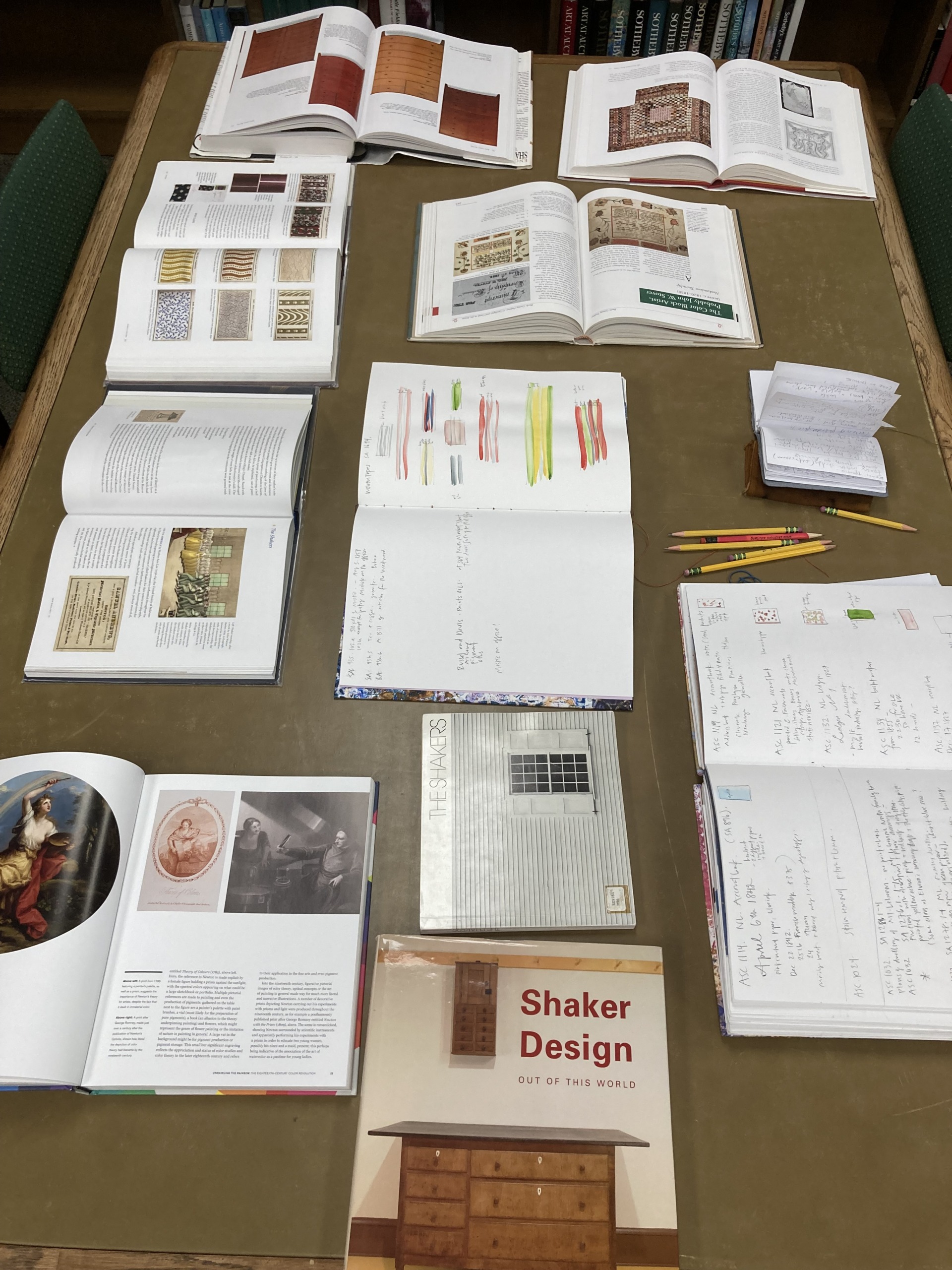
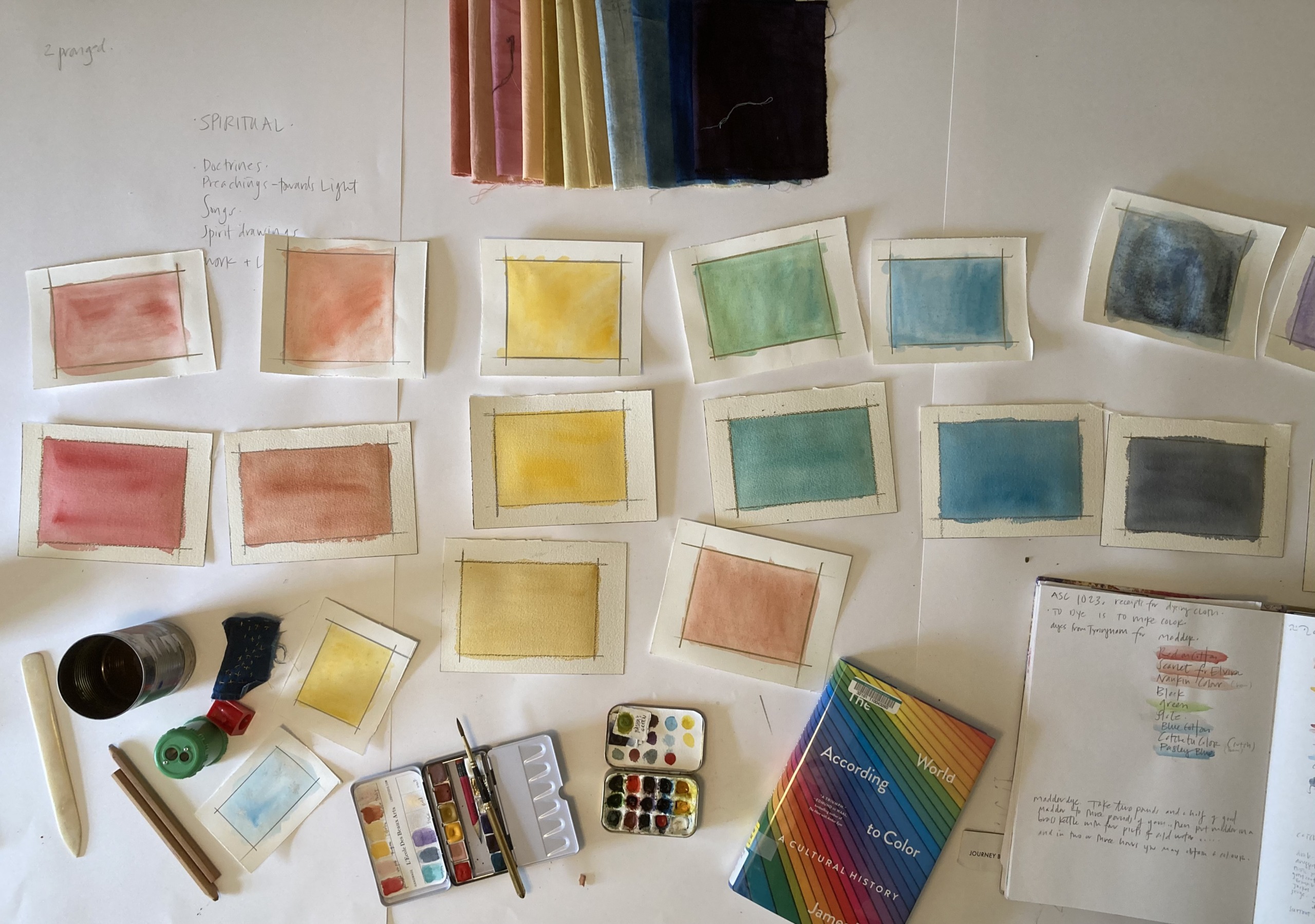
today I’m setting the table for my friend’s indigo dyeing class studio visit
walking around the table so many to thank, including-- -india flint at haystack for her ecoprinting class -norte maar & Jason Andrew for showing ‘a year’s worth’ -and later bewilder work with catalog -everyone that taught & talked to me about natural dyes -working at Naumkeag with their amazing flower gardens -being a TA for Kathy Hattori at Haystack and dyeing with so many talented dyers -learning that Shakers wore ‘any color they could dye’ as an artist in residence at Hancock with Smp -showing not once but twice with like-minded artists interested in the Shakers, organized by Albany airport & Eric -performing meetinghouse with miram at a moonbow event and later eal publishing it and then adding a podcast -working with curator Christie Jackson & all at Fruitlands on ‘anything but drab’
often one thing leads to another oftentimes it's just someone’s faith in your work or just willing to say yes to something never done but always, I am filled with so much gratitude to all. Thank you.
On Saturday 21 March, please join me at The Slade School of Art’s Colour & Poetry: A Symposium VIII free registration HERE
I’ll be reading three new poems gleaned from recent research at Historic Deerfield Memorial Library-- works/translations of Mrs Merrifield, Isaac Newton and other colour writers. .
[images from Syme’s “Werner’s Nomenclature of Colours’ found in the Stephen L. Wolf Collection at Historic Deerfield Library]
[Brece Honeycutt, reading & writing with mrs merrifield {graphite, tea, gouache, watercolor on paper}, featured in the online exhibition, The Nomenclature of Colours, The Slade School of Art]
[listen here via Soundcloud to hear me read, ‘reading & writing with mrs merrifield']
color collected: Stephen L. Wolf Collection Memorial Library, Historic Deerfield
……………………………………
color as pie charts dots blots
color as time keepers palette makers
color as gridded groups accented accidents
color as prism percussions regulated registers
color as absolute attributes sequenced saturations
color as consumer consensus compasses quandaries
color as faceted philosophies fascinating phenomena
color as tangents into treatises notions into nomenclatures
color collected
……………………………………………………………
—Munsel, Munsel Book of Color —Rimington, The Art of Mobile Colour —Chevreul, Chevreul on Colors —Chevreul, Des Couleurs —Hay, Nomenclature of Colours —Hitchcock, Religion of Geology —Birren, Color for Interiors —Field, Field’s Chromatography for Artists —Gaspard, Theorie des couleurs —Bustanoby, Principles of Color Mixing —Walch, Color Source Book —Jones, Grammar of Ornament —The Painter’s Handbook —Wolf Flow Colors, Wolf & Son’s Paints
Color begins to line up this week Into rectangles and squares Into thin lines Into grids
. Mills, The Painter’s Handbook, 1887 Jorgensen, The Mastery of Color, 1906 Bonnie Snow & Hugo Froehlich, The Theory and Practice of Color, 192 Cleland, A Grammar of Color Arrangements, 1921 Elizabeth Burris-Meyer, Historical Color Guide, 1938 Faber Birren, Color for Interiors Historical and Modern, 1963 Maerz, A Dictionary of Color
This week, I’ve been ‘touching Colours,’ to quote the first book seen–John Hoofnail’s 1764 ‘The Painter’s Companion –found in the amazing Stephen L. Wolf Collection at Historic Deerfield Memorial Library.
Wolf owned and operated S. Wolf’s & Sons, a NYC family business began in 1869. He built the premier private library on all things color and paint and varnish and theory, including Newton, Syme, David Hay, George Field, Chevreul, Munsell, Burris-Meyer—just to name a few.
I am so thankful for my Library Research Fellowship to use the Wolf Collection for my project Prismatic Utopia. Reading these books will further situate the Shaker’s cutting-edge use of color in the early 1800s, during the age of ‘harmonious colour.’
Images --Field, Chromatic Equivalents --Hay, The Laws of Harmonious Colouing --Kyan, Elements of Light --Church, Colour --Syme, Werner’s Nomenclature of Colours --Hay, Nomenclature of Colours --Masury’s Ready-made paints --Chevreul, Des Couleurs --Bacon, Theory of Colouring --Field’s, Chromatography --Hoofnail, The Painter’s Companion
Find more information on the Library Fellowships, here
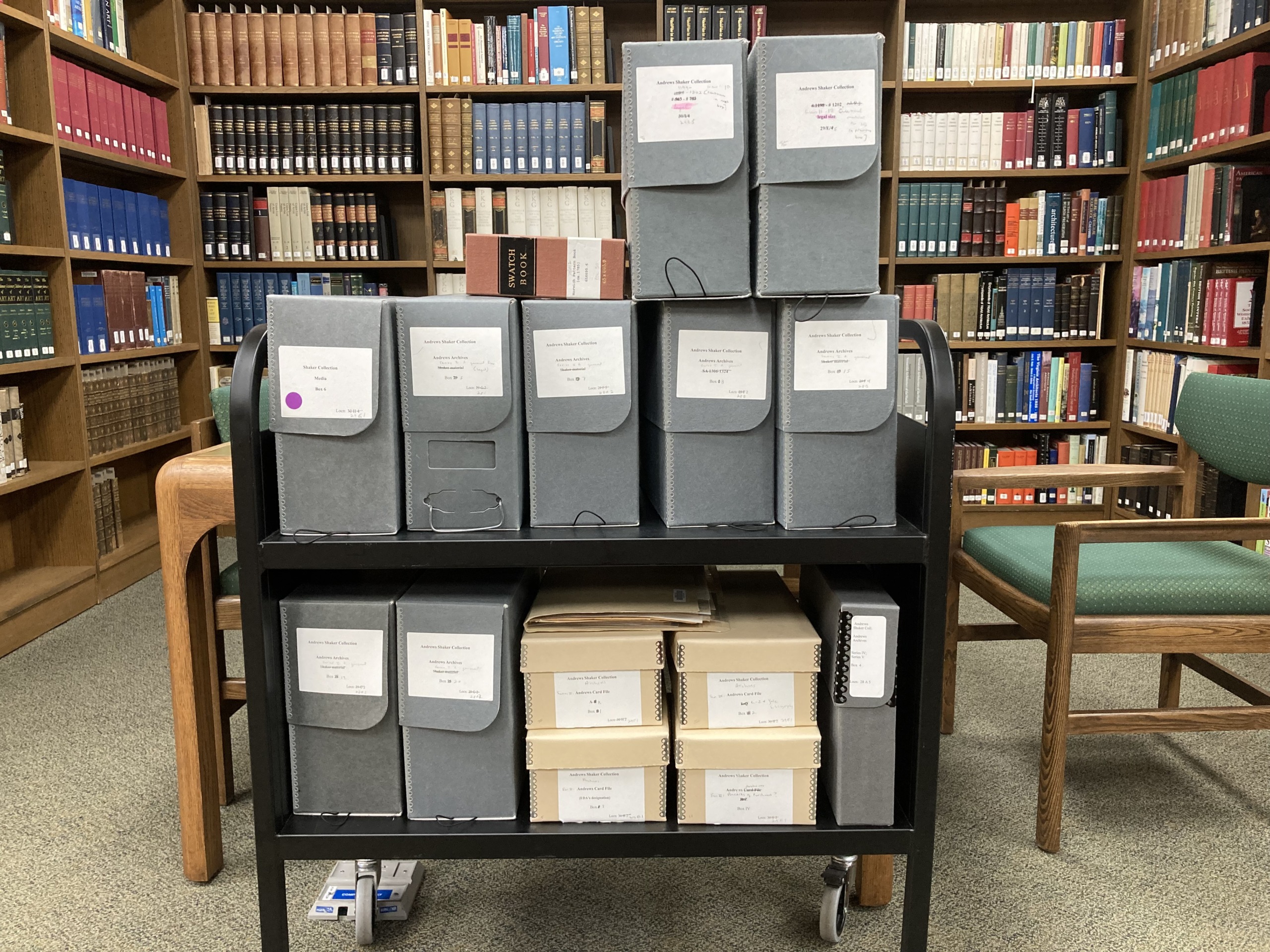
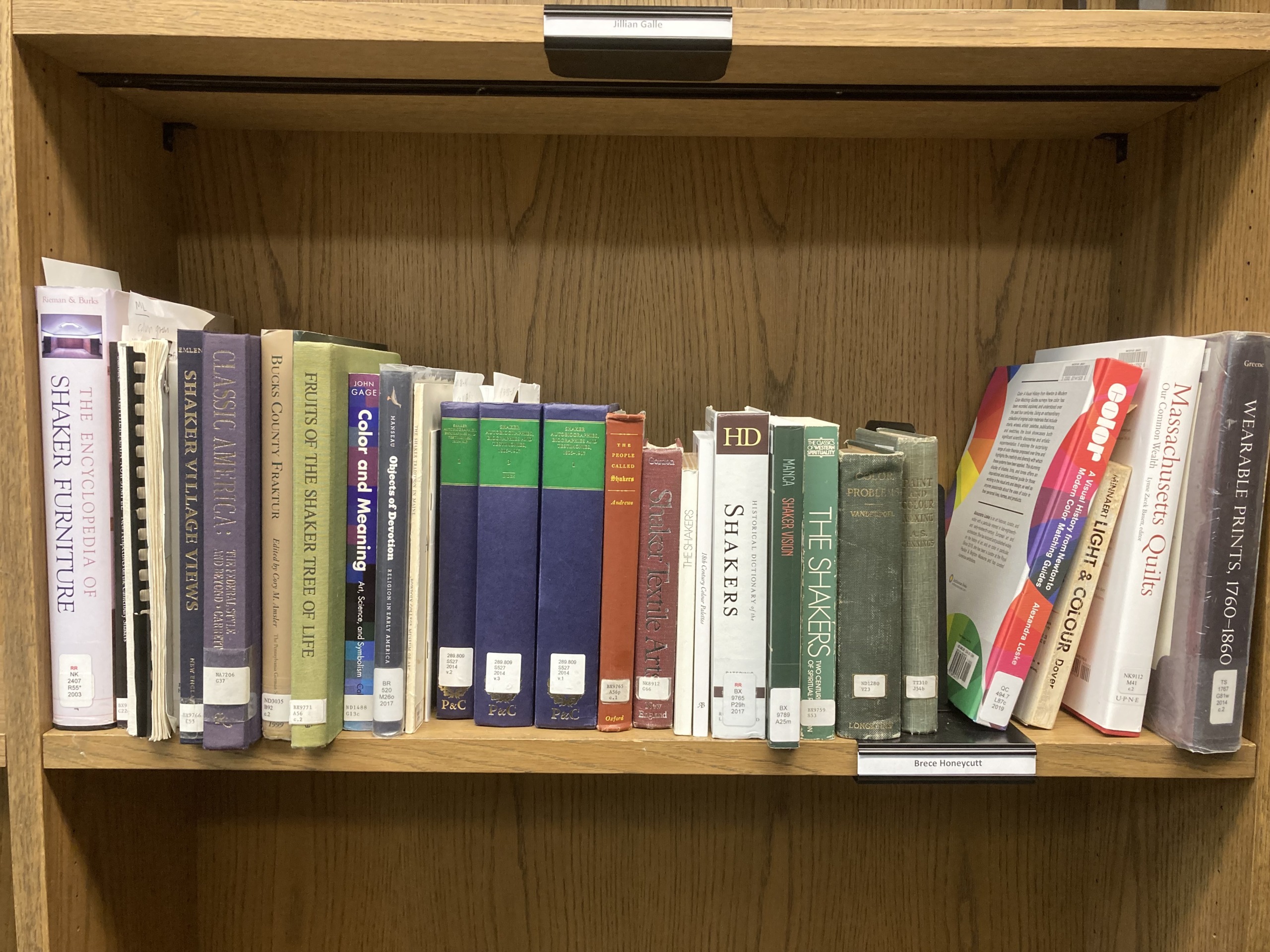
this is what research looks like-notes on a wall, folders on a table, books stacked high
this is how research is defined as a noun: the systematic investigation into and study of materials and sources in order to establish facts and reach new conclusions
this is how research is defined as a verb: investigate systematically
looking forward to presenting my research Prismatic Utopia at the Deerfield Fall Forum ‘A Rich and Varied Palette: Coloring New England’s Past’ 13/14 September.
“Historic Deerfield’s 2024 Fall Forum, A Rich and Varied Palette: Coloring New England’s Past, convenes a group of leading researchers and scholars to explore the vast subject of color and its history. Research and publication in the history of color has been growing in recent decades, but few studies have examined color’s impact on specific cultural regions, such as New England. The program’s lectures will focus on the diverse topics of global colorants and textiles, lithoprints in 1840s New England, painted furniture at the Bath Academy, japanned furniture, Shakers’ color use and meanings, New England’s textile bleaching industries, chrome yellow and pink as pigments, and the paints and finishes of the Rockingham (Vermont) meeting house.”
More info HERE for in person or virtual registration.
Thanks to Merriam Webster for the definitions and to Historic Deerfield for the opportunity.
started a summer series with
Mary Gartside’s colour blots
as inspiration
dahlia prints from Naumkeag Artist residency
daffodil ink from Suzi Banks Baum
pinecone ink from Hancock
studio work table #workinprogress
summer 2024 dahlia series
.
[second image, Gartside Yellow and Orange blots found in ‘Mary Gartside c. 1755-1819: Abstract Visions of Colour’ written by Alexandra Loske and published by Thomas Heneage Art Books]
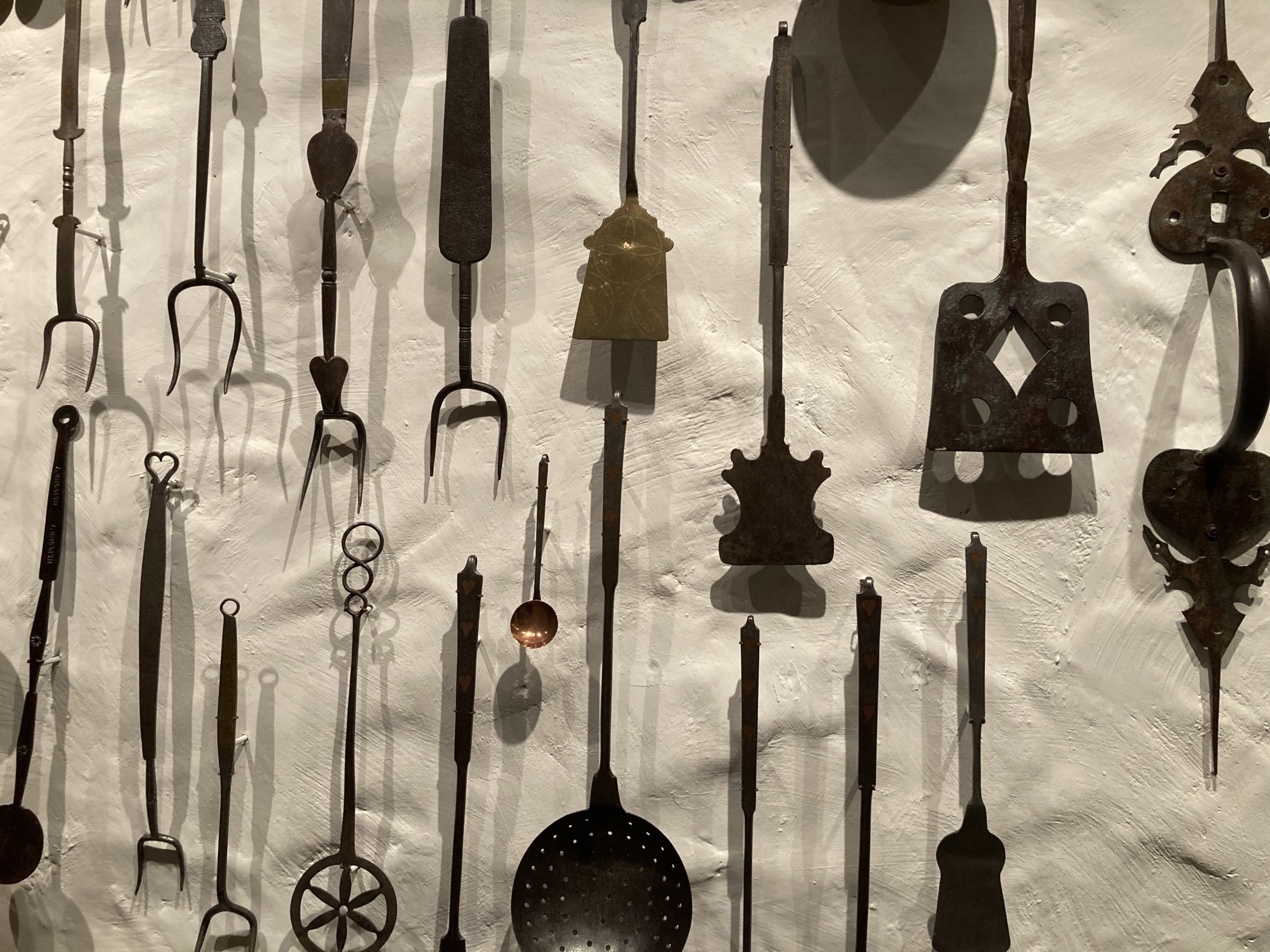
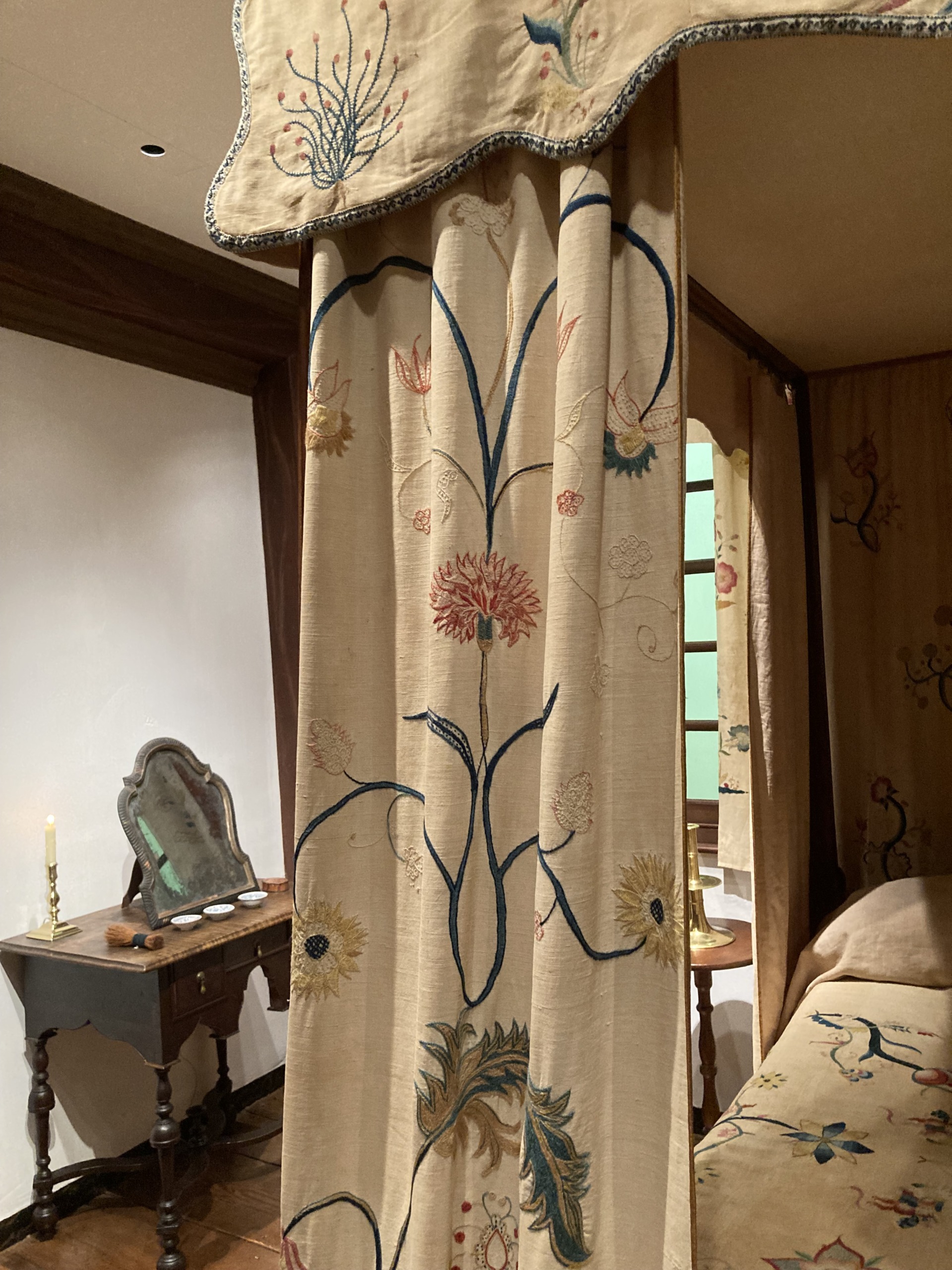
90,000 artifacts (textiles, ceramics, furniture, ironwork….)
20,000 American & European imprints
3,000 record groups of manuscripts, trade cards, photographs, ephemera
7,500 plant specimens
1,000 acres
+Specialists, Conservators,
+Librarians, Archivists,
+Curators, Gardeners,
+Scientists, Fellows
“Research is a material”
and earlier this year,
as a Maker-Creator Fellow,
I explored Winterthur's Shaker collection
(and others) and loved every second
of researching, working with archivists,
conservators, curators,
fellows and librarians;
and walking on their incredible grounds.
Artists & Makers
consider applying for
Winterthur’s Maker-Creator Fellowship!
Happy to answer any questions.
Applications due 1/15/2024
Application info right HERE